

Software & Vendor Selection

Software & Vendor Selection

Selecting and implementing ERP, CRM, WMS, SCM, POS, or HRMS applications is a difficult endeavor. Choose the right guide to steer you through this journey.

Software Implementation Success is DEFINED in the Selection Process

A formal software and vendor selection ensures you pick the right solution and right partner.
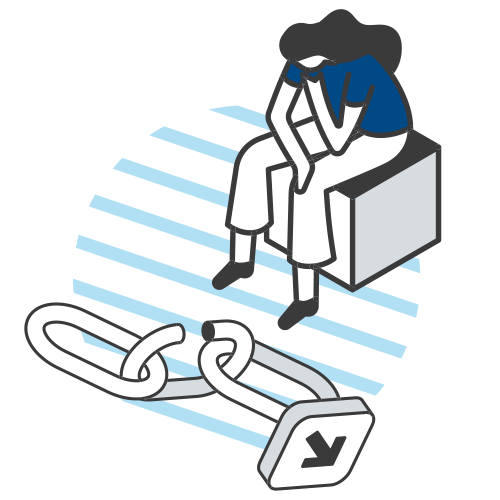
Up to 75% of ERP software projects fail to meet their objectives.
(Gartner)

Picking the wrong solutions, and picking the wrong vendors are some of the leading causes of failure.

Our Approach

We have developed a specialized methodology tailored for business application software selections. Whether you are selecting an ERP, CRM, WMS, SCM, POS, HRMS or another solution, our structured approach ensures a thorough and effective process, providing clarity and confidence in every step of the selection journey.

D
E
F
I
N
E

Detail Requirements 6 weeks

Document organization's future requirements:
  • Focus on defining requirements for where the business is going, not where it is
  • Gather requirements based on people needs, process needs, and technology needs
  • Rank requirements by criticality
  • Develop the business case with ROI expectations
Deliverables:
  • Solution Requirement Documentation
  • Vendor Requirement Documentation
  • Business Case with ROI

Elicit Proposals 3 weeks

Create RFP and Contact Vendors
  • Identify and compile a list of potential vendors who will receive RFP
  • Distribute RFP
  • Provide vendor briefings and clarify RFP
  • Review proposals and shortlist candidates
Deliverables:
  • Request for Proposal (RFP)
  • Vendor Shortlist

Facilitate Demos 8 weeks

Select vendors for software demonstrations and attend demonstrations:
  • Create real-world scenarios and use cases that reflect your organization's business processes
  • Key stakeholders and end-users attend, filling out vendor scorecard
  • Contact references provided by the vendors to learn about their experiences with the software solution and the vendor's support and service
Deliverables:
  • Software & Vendor Assessment Scorecard
  • Reference Scorecards

Investigate Options 2 weeks

Evaluate vendors against requirements and provide selection recommendation
  • Aggregate software and vendor scorecard results from key stakeholders and end-users
  • Provide a written recommendation for best path forward based on results
Deliverables:
  • Software Scorecard Results
  • Vendor Scorecard Results
  • Reference Scorecard Results
  • Executive summary with software and vendor recommendation

Negotiate 3 weeks

Review and negotiate contracts:
  • Provide insight on typical negotiable terms
  • Improve negotiation outcomes
  • Ensure data protection and compliance
  • Understand risk exposure
  • Ensure that the scope and services cover the needs
Deliverables:
  • Redlined Professional Services Statement of Work (SOW)
  • Redlined Master Services Agreement (MSA)
  • Redlined Software Licensing & Maintenance Order

Execute Contracts 1 week

Review and negotiate contracts:
  • Sign contracts
  • Align on next steps with vendor
  • Transition to engagement team
  • Inform vendors who were not selected
  • Start planning for the software implementation phase
Deliverables:
  • Signed contracts
  • Risk Assessment

WHY CHOOSE NET AT WORK

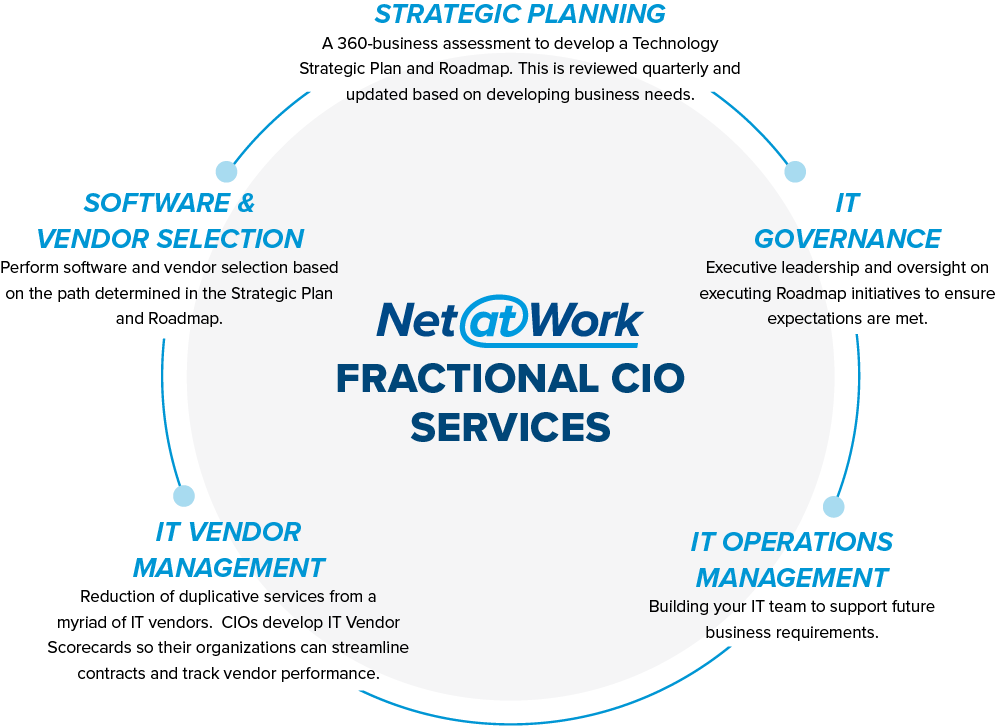
Net at Work’s Fractional CIO & Advisory group offers specialized software and vendor selection services. Our aim is to guide organizations in choosing solutions that digitize operations, streamline processes, and bolster employee capabilities using cutting-edge technology and automation tools. Recognizing the significance of building for the future, many organizations opt for a formal software and vendor selection process.

When selecting a major business application like an ERP solution, it’s crucial to anticipate the long-term impact, as these solutions will likely be utilized well beyond 2040. Partnering with Net at Work ensures that your organization is equipped to make a judicious choice, aligning the solution with your strategic goals and future needs.
Featured Software Selection
Resources & News


Recorded Webinar
Leading Successful Digital Transformation Through Organizational Change Management
Business leaders, watch this expert-led webinar to learn about the tools, benchmarks and best practices that are shaping the way manufacturers approach change management when implementing technology.
Blog Post
Five Signs Your Technology Roadmap is Incomplete
As we discussed in a previous article, a formal technology roadmap is often lacking among small-to-medium-sized (SMBs) organizations, leading to a reliance on manual, paper-based processes, legacy technology, spreadsheets, or other homegrown systems that dilute the business’s ability to compete effectively in today’s digital economy. On the other hand, some SMBs may believe that they have a solid technology roadmap in place, only to find that their roadmap is not as complete as they might have thought. In turn, not properly building and using a roadmap can increase the risk of a failed digital transformation. In fact, bad planning itself can often lead to failure. According to a recent CIO article, “8 Reasons Why Digital Transformations Fail,” when there is a lack of effective, consistent communication, digital transformation efforts often fail or don’t garner the full adoption the business hoped for. The first warning signs will be felt by the business itself. For example, if businesses use KPIs and metrics to track costs, growth, productivity, speed, and overall efficiency, those indicators may confirm that the business is missing real opportunities to improve existing processes to better support its most important goals. “Technology can give businesses a major competitive advantage, especially when it comes to automation, more efficient operations, reducing costs, and delivering important business insights.” Technology can give businesses a major competitive advantage, especially when it comes to automation, more efficient operations, reducing costs, and delivering important business insights. By properly using a technology roadmap as a planning tool, SMBs will increase their rate of success with the roadmap initiatives. The Warning Signs If your company is experiencing any of the challenges described above – or looking to capitalize on new opportunities – here are five warning signs that your technology roadmap may be incomplete: No collaboration or feedback: It’s important to remember that a technology roadmap is an evolving tool to facilitate decision making and planning. If your plan doesn’t have an obvious way to incorporate feedback from key stakeholders and improve over time based on this collaboration, chances are good it’s not complete and there is no formal change management program. Lack of engagement from executives: Similarly, your technology roadmap should include input from key stakeholders, including owners, executives, technical staff, managers, and end users. If your existing roadmap doesn’t reflect their insights, perspectives, and requirements, it’s probably not aligned with everyone’s expectations. This will be reflected in a lack of buy-in from stakeholders. Missing risk calculations and budget considerations: Let’s face it: every technological initiative comes with real – and often significant – risks and potential challenges. Many businesses fail to attach budget numbers to each technology imitative, and once businesses embark on their transformation, they may realize that they vastly underestimated the investment and resources needed to deliver the roadmap. If your technology roadmap doesn’t factor these variables in and thoroughly assess how the organization can address them, these initiatives may face more obstacles than you originally thought – and may even be doomed right from the start. No timelines or scope: Every technology roadmap should include a realistic timeframe and scope of work that carefully aligns with the company’s capabilities, resources, and overall goals. Companies need to find the balance between product rollouts and deployments that are too aggressive while not waiting too long to capitalize on the right technology. All of this needs to be carefully considered and included as part of your technology roadmap.  It’s a fair point that many SMBs may lack the senior IT staff to help drive technology decisions, yet they still can’t ignore market trends or technologies that can clearly improve their business. This doesn’t need to be as futuristic as artificial intelligence; many SMBs can benefit from basic automation tools, CRM and ERP solutions, or specialized technology such as AP automation systems The best way to overcome these challenges is to review and update your technology roadmap on a regular, ongoing basis. It will also help to bring an objective view to these reviews to best answer the following questions:   Is our roadmap as complete as it could be?   How can we make this roadmap better?   Who else could help us improve our technology planning?   Would an external third party’s view and expertise be valuable in providing us with independent feedback on our strategy and technology roadmap execution? Such a mindset and a commitment to improving will help make your technology roadmap even better, and in doing so, better position your company for greater success. 

READY TO GET STARTED?

Our experts are ready to answer any questions you may have. Use the contact form or contact us directly below:

General Inquiries:

1-800-719-3307

Contact a Software Selection Expert